
An Altruism-Based Free Market Economy – How does that work?

The Problem:
Our dependence on monetary exchange as a way to manage the production and distribution of both limited and abundant resources has led to extreme inequities in the possession of health and wealth on a global scale.


Such vast inequalities occur because an economic system that depends on monetary exchange primarily rewards the worst parts of human nature; mainly greed and selfishness. While money can be used to support pure generosity and kindness, such use occurs as the exception rather than the rule. The people who run corporations, businesses and other organizations do so mainly because they want to get as much money as possible from their customers. The people who work for the corporations and businesses do so mostly because they want to get as much as money as possible from their employers. Finally, the customer wants to give businesses the least amount of their hard-earned money as possible for goods and services that meet their expectations for quality and performance. All of these goals are diametrically opposed. They are all focused on a “what’s in it for me” mindset. The “winner” is the one who most successfully exploits people and the planet by pretending to genuinely care.




Big oil companies say they care deeply about people and just want to provide them with the energy they need to live a life full of comfort and convenience. However, a look into company documents show big oil executives care more about hiding what they know about their industry’s contribution to climate change because they don’t want to lose profits to cleaner energy sources.

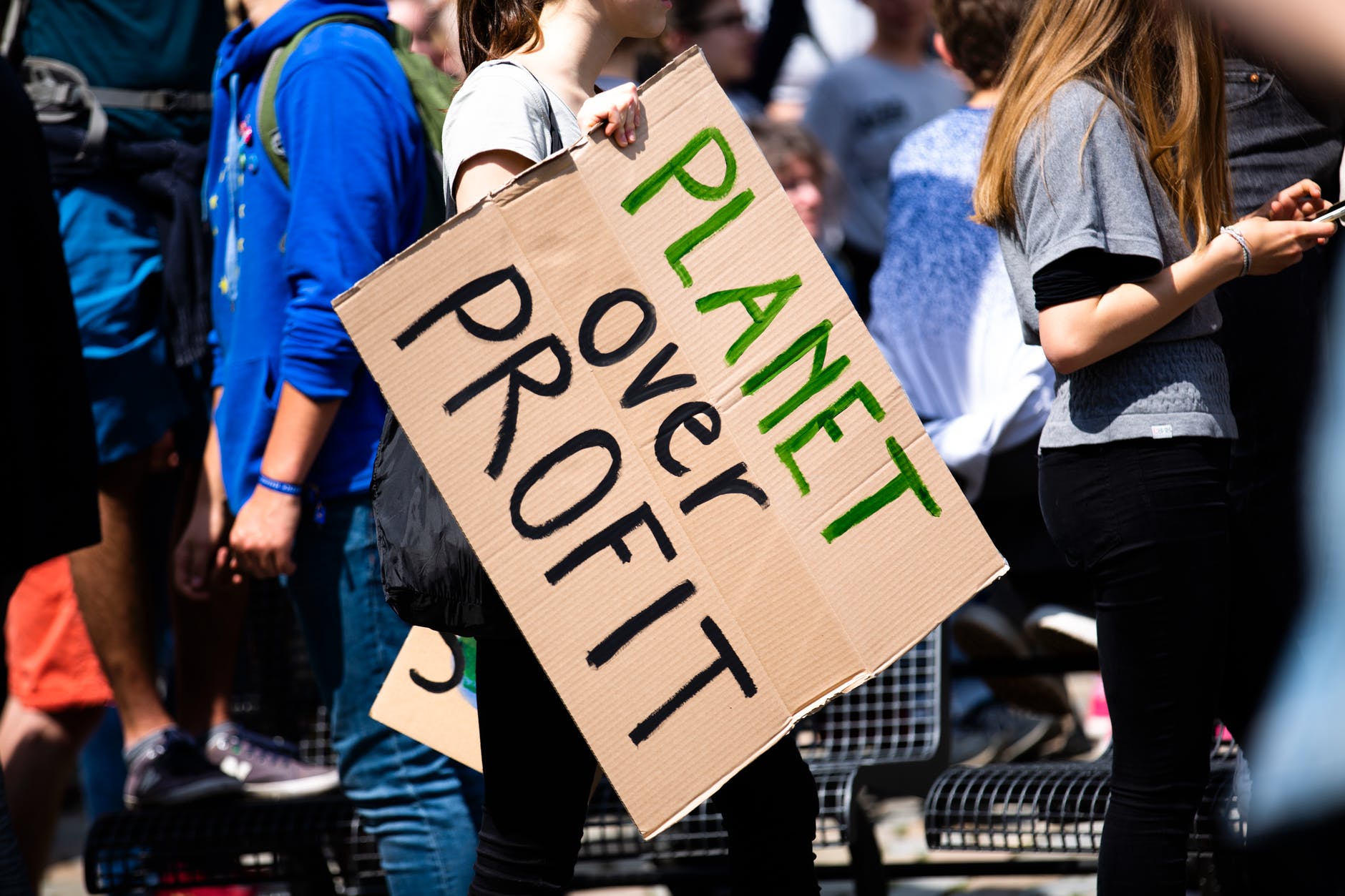

Soda companies claim they just want to provide people with delicious refreshments, although they know such drinks contribute massively to the obesity epidemic, dental caries and contain absolutely no nutritional value.



Car companies allegedly just want you to be happy. So they sell you images of fancy vehicles that tell you life will be wonderful after you acquire the car of your dreams, although study after study proves that the quality of our personal relationships, not material goods determines deep and lasting happiness.



Those individuals who participate in illegal activities of course don’t have to pretend to care about their customers’ well-being. They don’t have to develop a “feel-good” mission or vision statement about what they provide. Both seller and buyer understand and accept that the only mission statement is the following: “I want you to buy my product or service because I want your money.”



While there are some in the business world who do genuinely care about their customers and employees, they are still ruled by what matters most: the bottom line. A business owner may want to lower prices for their customers. They may want to pay their workers a living wage. However, they often cannot do so because their very existence depends upon their ability to earn enough money from customers in order to cover their expenses. A corporate CEO cannot simply decide to reduce prices. They realize their corporation’s existence depends on satisfying shareholders who invest in the company because they expect that company to bring in large profits. The lawn service person may not want to charge as much, but they have to when owners of gas companies decide to astronomically raise prices. A customer may want to support the local family-owned grocery store. However, they may not be able to do so because only the big-box chain store offers prices that fit within the limited budget of their low wage job. In an economy that is based on monetary exchange, the supply and demand chain is a very complex interconnected web which no one can escape. Every participant, from the neighborhood baby sitter, to the restaurant owner, to the CEO is trapped within a system where everyone charges, and therefore everyone owes. ‘In the world of money, everyone lives on bended knee,’ said Brian Thomas, who is a managing director at Prudential Private Capital. (Time Magazine, May 23rd/May 30th 2022. “Why We Can’t Quit Oil,” by Justin Worland. p.46)



A Proposed Solution:
But what if there were a way to create a global economy in which people did not demand money in exchange for goods and services? What if instead of monetary exchange, everybody in the global economy agreed to work in exchange for the knowledge that they were genuinely needed, valued and appreciated for using their talents and skills to make positive contributions to their communities? In other words, what would the world look like if everyone, from the corporate CEO to the neighborhood babysitter, agreed to work for free?
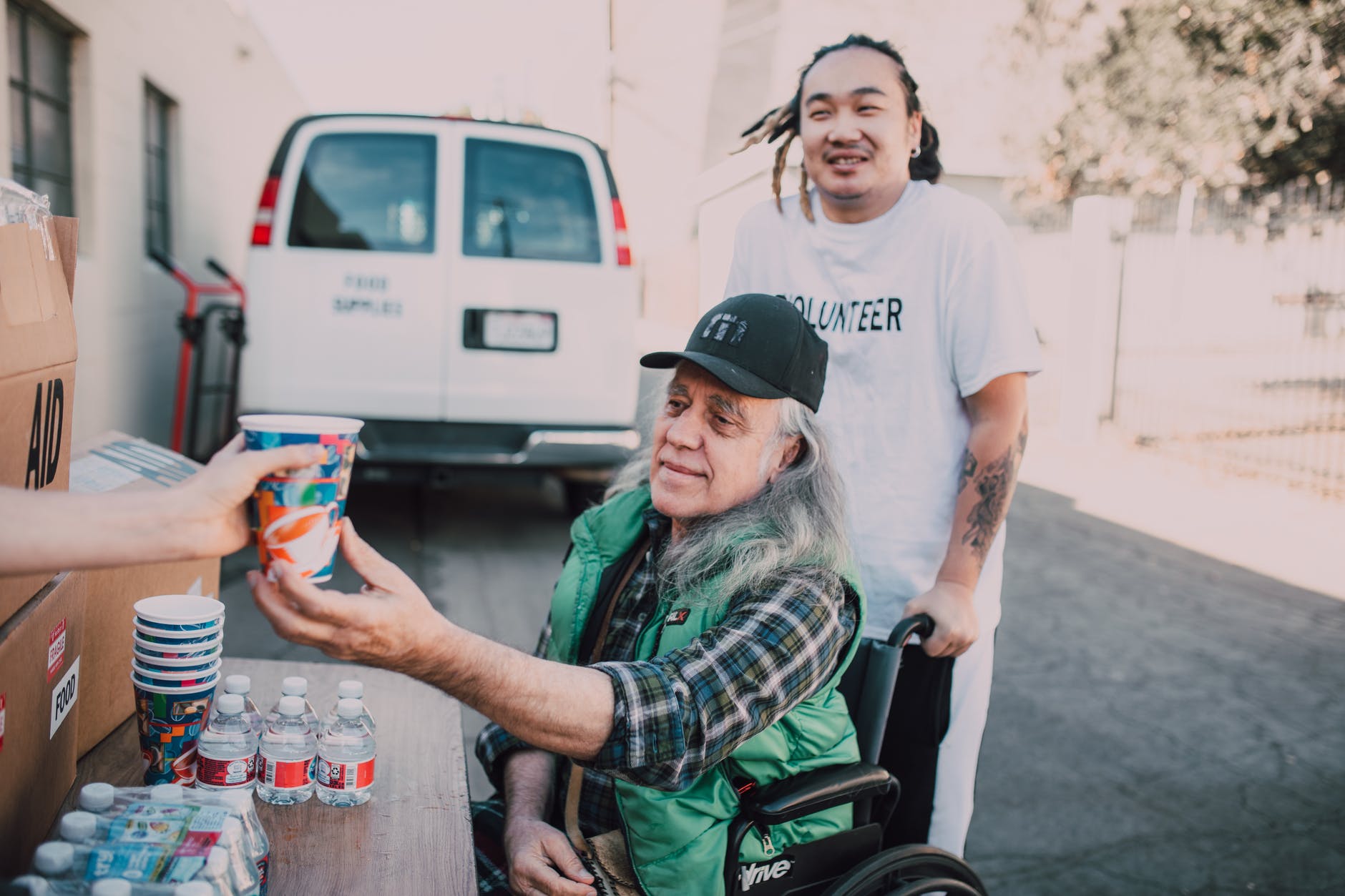


Our first impulse may be to think that such an idea is a ridiculous fantasy. We may find it impossible to imagine how a global economy based purely on human generosity can function, especially since we live in an age when so many millions of people have learned to be ungenerous and unkind in order to survive in the current economic system. We may rightly ask, how is it possible for hundreds of millions of people to change their mindsets when they are primarily self-centered and focused almost entirely on monetary gain. Fortunately, the last few decades of neuro-scientific research has revealed that our minds are far more flexible than previously believed. Studies on the neuro-plasticity of the human mind reveal that we are capable of re-wiring old neural connections and forming new connections, even into old age. What’s more, recent advances in technological development have been accompanied by advances in the science of human happiness which show that generosity and meaningful social connections create deeper and longer lasting feelings of well-being compared to superfluous monetary gain. (See The Oxford Handbook of Compassion Science, edited by Seppälä, Simon-Thomas, Brown, Worline, Cameron, and Doty. Oxford University Press, 2017). In other words, an international economic system that relies on human generosity is exactly the kind of system that can promote human health, wealth, and happiness on a global scale.


Human nature has many sides, but for far too long we have relied on an economic system that rewards our worst sides and dampens our natural inclination to be kind, compassionate and generous. https://news.umich.edu/children-show-altruism-at-young-age/ If we want to survive the extraordinary threats of our age such as climate change, an epidemic of violence, addiction, depression, poverty, etc., then we must think of ways to build a fully functioning economy that relies on and fosters the best parts of human nature. When we fight the urge to give in to hopeless despair and instead embrace the incredible adaptability that has allowed our species to survive over 200 thousand years, we become capable of controlling future outcomes. In other words, when we use our innate creativity and intelligence to learn and grow, it becomes possible to forge a new world in which everything is better. When we humans learn to highly value the core values of kindness, compassion, competence and service to community instead of monetary exchange, the transition to a happier, healthier, more equitable world becomes possible.



Imagine how you would feel living in a community where your doctor, your car mechanic, your teacher, your lawyer, and every other person did their jobs solely because of a pure and genuine desire to provide you with kind, compassion and competent service? How would you feel knowing that everyone (from corporate managers to caregivers) did their jobs not for money, but in exchange for the knowledge that they were doing their part to contribute to their communities? And you did the same in whatever job you chose. In a world of mutual generosity, the opportunities for living a healthy, happy, fulfilling life increase dramatically for everyone. In a global economic system where money cannot be exchanged, there would be little to no incentive to participate in criminal behavior such as drug-dealing, murder, sex-trafficking or theft. If the custom of monetary exchange were to become unnecessary because both employers and employees have learned to highly value generosity and competence, then companies and organizations could focus entirely on being effective, rather than on being cost-effective. In a world where everyone agrees to value people rather than profit, it becomes much easier to follow the natural inclination to be generous, kind and helpful so deeply embedded in our DNA.



A Collaborative Work in Progress:
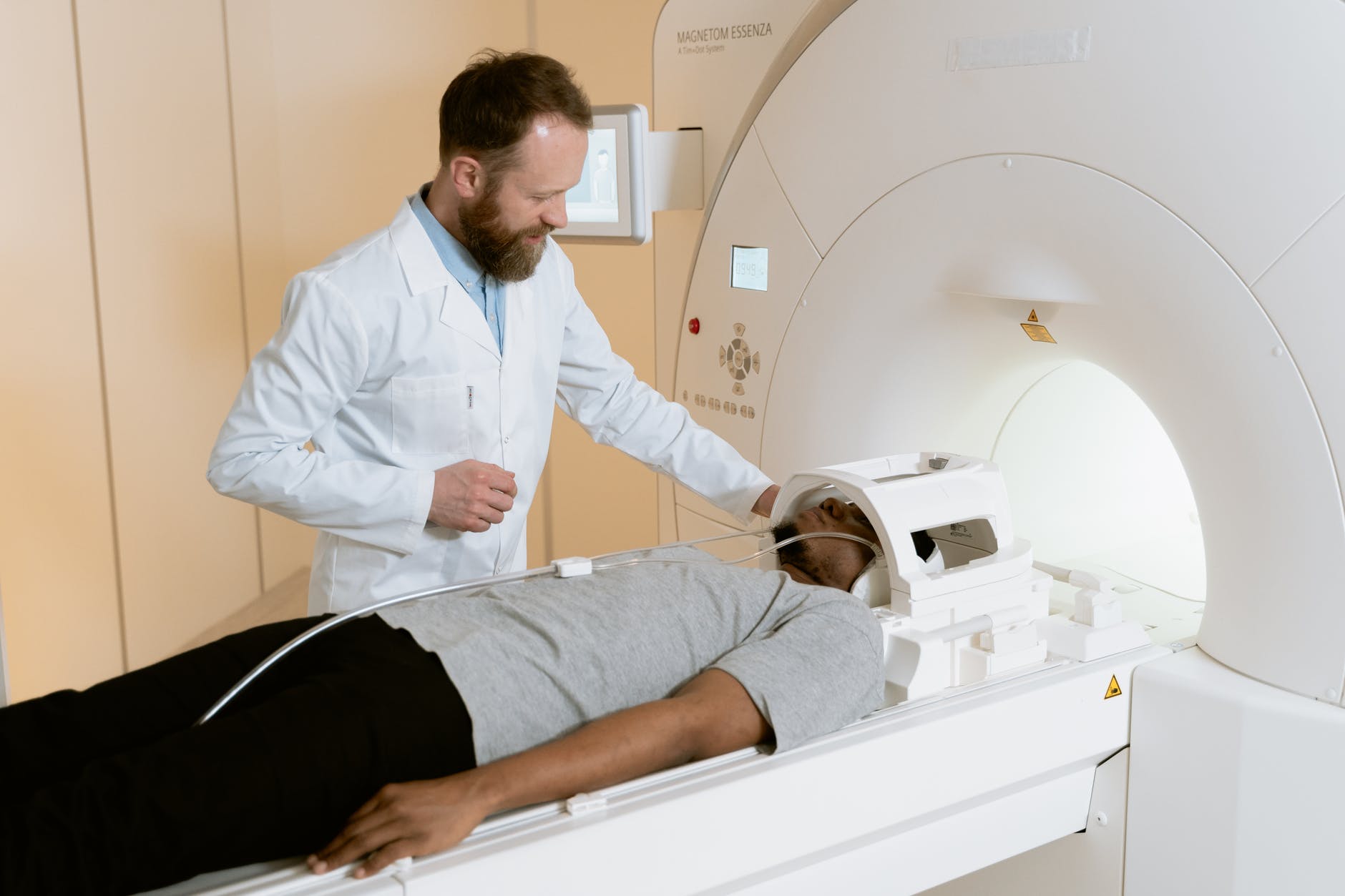
I will not pretend that I have all the answers because obviously one person cannot possibly complete such a massive undertaking like the re-structuring of a global economy. Therefore, as you read the following sections, think about suggestions you could make to improve the proposed system and put those suggestions in the “Comments” section. Talk to friends, family, and co-workers who might find this concept intriguing and direct them to this blog so that they can make comments as well. The more people who get involved, the more possible it becomes to make the idea a reality. Finally, instead of speculating about what other people might do, I would find it most helpful if you first commented on how you might act while living within an altruism-based economy. Cheers, and I look forward to hearing from you!

Where are the Kindness, Compassion, Competence, Service to Community (KCCS) core values learned and taught?
- Homes and Families
- Schools, Colleges, Universities, Prisons
- Corporations, Businesses, Organizations, Governments
- Any other places?



What sources inform the curriculum?
Expand established and effective secular and religious programs that teach the physical, psychological and social health benefits of practicing kindness, compassion, mindfulness, and service to community. A few examples:
- Center for Compassion and Altruism Research and Education: Stanford University
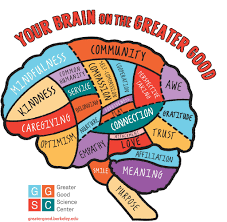
- Greater Good Science Center: University of California, Berkeley
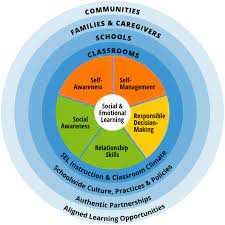
- Collaborative for Academic, Social, and Emotional Learning: Chicago, Illinois
- Center for Healthy Minds: University of Wisconsin-Madison
- Teachings on kindness, compassion and mindfulness in Buddhism, Christianity, Darwinism, Hinduism, Indigenous African, American, Australian, and European Religions, Islam, and Judaism
- Any other programs?
The following outlines just one idea of how an altruism-based economy might function. For a general overview in flowchart form, click on this link. https://documentcloud.adobe.com/link/review?uri=urn:aaid:scds:US:b3d4e8cd-3c10-46f0-b624-b087c991e676#pageNum=1
Again, please feel free to offer constructive criticism, alternative solutions, additions, edits, advice or anything else you believe may prove helpful to building a healthier, happier, fully sustainable world.
Nuts and Bolts of the System:
1. The Foundation: Education. You complete a K-14 education which includes all the regular subjects (math, reading, writing, social studies, etc.) and which emphasizes 4 core values: Kindness, Competence, Compassion and Service to the Community (KCCS). Hopefully, after completing your KCCS education, you will have internalized these basic core values that have been consistently taught from your kindergarten year through your senior year in high school and beyond. Since the purpose of KCCS schooling is education, not indoctrination, students will not be required to believe the concepts taught in courses on the science of happiness, compassion, kindness etc. Students will simply be expected to demonstrate understanding of the concepts and to satisfactorily complete all requirements for graduation. After completing all of the requirements, it is completely up to the graduate to decide if they want to live and practice what they have learned over their 14 years of education. If you are an older adult who has already graduated from a high school in the old system, you can take classes (online or in person) to earn a KCCS certificate at an approved Center for Continuing Education. If you are an adult whose life experiences and actions clearly demonstrate that you have already mastered the art of being kind, compassionate, competent and community service-oriented, you may be granted exemption from taking KCCS classes. Questions to consider: What ideas do you have about the adult certification process? Do you feel that you or your children would think and act differently after graduating from a KCCS school or after earning the adult KCCS certificate? If you are a teacher, are programs that focus on kindness and compassion already a part of your curriculum? If so, how well are these programs working?




2. Income After you complete the requirements for a KCCS education (Kindergarten through grade 12 plus 2 years of trade school, university or college), you will receive a Universal Basic Income via monthly direct deposit. What is the purpose of income in an altruistic economy where most people have learned to be kind, compassionate, competent and service-oriented? At first, I tried to imagine an altruistic society with no money at all. I initially imagined an economy in which everyone took just what they needed and worked reasonable hours that left enough time for rest and relaxation. But, I couldn’t figure out an acceptable way to decide who would receive a particular good or service if there wasn’t enough of it to go around. For example, what does a real estate company do if 10 people really want to purchase one particular house in one particular neighborhood? In a society where money does not exist, would they toss a coin to see who gets the house? Conduct a lottery? Give it to the family or individual who seems “most deserving?” None of those types of options seemed fair or objective. So, I decided it would be best to just eliminate the monetary exchange factor, while keeping most other aspects of a free market economy intact. This means that when you “buy” something with your income, the price is subtracted from your account. However, the “seller” does not receive your money in exchange for providing you with the good or service. Businesses and organizations independently make decisions to set prices based on their ability to meet demand, not on their desire to make a profit. More details on how this works can be found in the sections below. Instead of reinventing the wheel, I decided to eliminate the one factor in a free market economy that seems to most undermine our altruistic propensities– monetary exchange. Questions to consider: Can anyone see a different way of resolving the problem? Are there other ways to disrupt “what’s in it for me” thinking or other ways to eliminate profit-driven misbehavior besides eliminating monetary exchange?



3. Prime Principle: No monetary exchange. As stated in the section above, money cannot be exchanged for work or for any other reason. In the altruism-based economy that I imagine, money exists only in electronic form. It cannot be withdrawn as paper cash or metal coins. It cannot be transferred from one person’s account to another person’s account. Everyone who has completed a KCCS education will simply have a specific sum of money deposited into their account every month. (More on how deposits work follows in the sections below.) This income cannot be collected in the form of taxes or distributed as an inheritance. When you die, your account is simply closed. Money cannot be given to any individual, business, or organization in any form. When you “buy” something with your income, the cost of that good or service is simply electronically subtracted from your account. Businesses do not receive your money when you “buy” a particular good or service. Neither CEOs nor employees nor anyone else receives money in exchange for the work they choose to do for their companies or organizations. Every KCCS-educated person does their jobs solely because of pure generosity. They do their jobs because of a strong desire to use their skills and knowledge to contribute positively to their communities, whether that be at the local, state, national or international level.


4. Reasons behind the Prime Principle. Money cannot be exchanged or transferred for the following four critically important reasons, some of which have already been mentioned above. The lack of exchange is intended to:
- a) disrupt “what’s in it for me” thinking and to promote pure generosity.
- b) remove the incentive to produce illegal goods and services.
- c) reduce the incentive to mass produce legal goods and services that harm the health of both the people and the planet.
- d) disrupt greed-fueled inflation.



The next four sections go into some detail about each of the rationales behind the prime principle.
5. Rational #1 behind the Prime Principle The elimination of monetary exchange is intended to disrupt “what’s in it for me” thinking and to promote pure generosity. As human beings, we are born with a natural motivation to help others. However, as soon as we are given some material reward in exchange for helping, we become less motivated to continue that same behavior. This is known as the over justification effect. According to the American Psychological Association, the over justification effect is “a paradoxical effect in which rewarding (or offering to reward) a person for his or her performance can lead to lower, rather than higher, interest in the activity. It occurs when the introduction of an extrinsic reward weakens the strong intrinsic motivation that was the key to the person’s original high performance.”https://dictionary.apa.org/overjustification-effect The APA’s definition of an extrinsic reward refers to “winning a trophy for finishing first in a race and receiving praise or money in the work setting.” Here’s a concrete example from me: A kid brings you a cup of tea simply out of the kindness of his heart. You say, “that’s so nice. Here’s a quarter.” The next time you see the kid, you ask for some tea and he says “where’s my quarter?” This type of scenario has been repeating itself for thousands of years since the dawn of barter and trade and since the introduction of monetary exchange. Is it any wonder that people explode in a bluster of scornful indignation at the mere suggestion that they work for free? It is my strong opinion that if we are ever going to learn to nurture, build and strengthen pure generosity, then we must eliminate the economic rewards system that severely stunts its growth. Questions to consider: Does anyone see a different way of addressing the problem? Do you believe it’s possible to do your job in exchange for money while maintaining high levels of genuine care and concern for the people you serve? Can you imagine doing any job at all with genuine care and concern without receiving money?


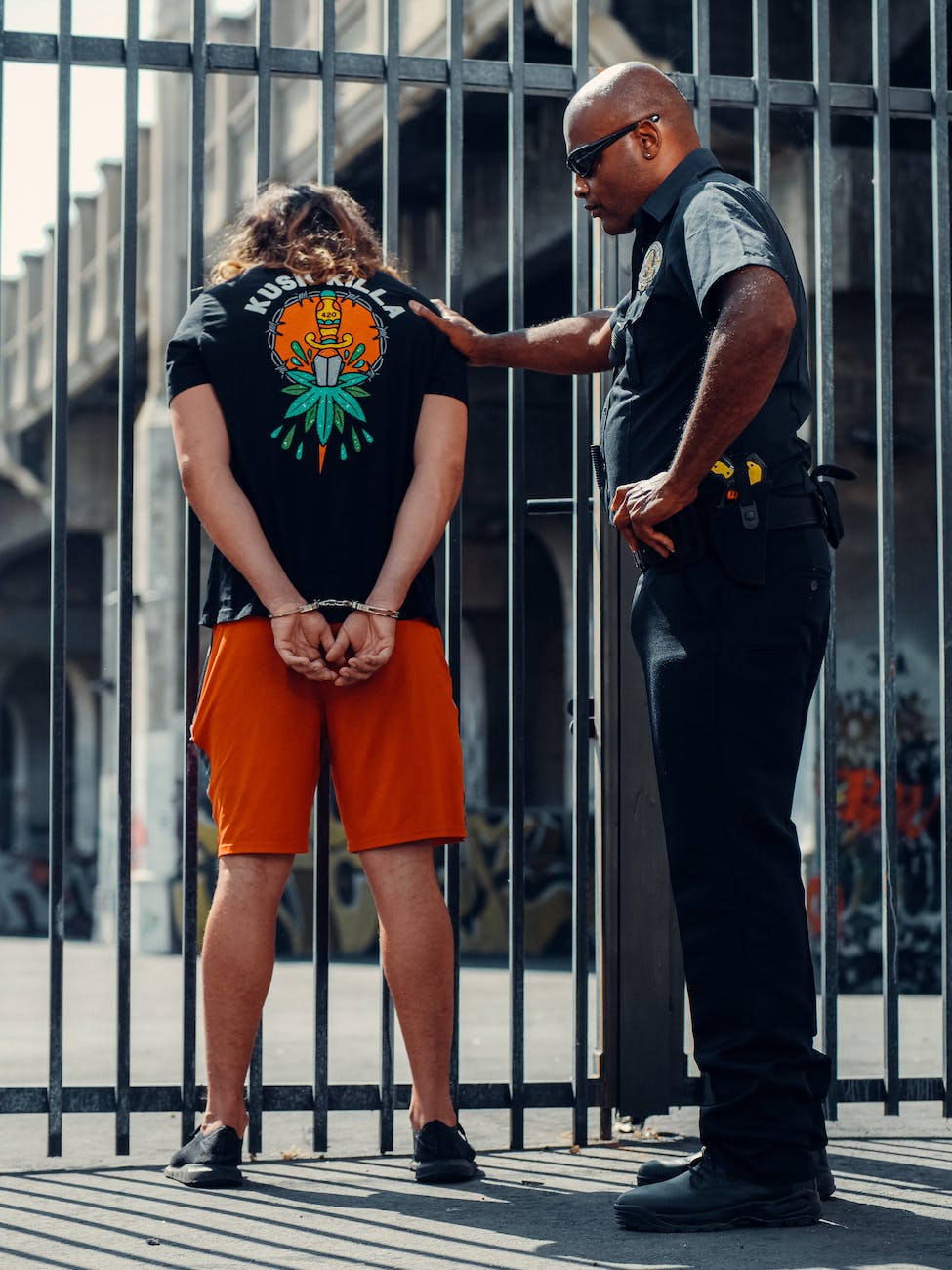
6. Rationale #2 behind the Prime Principle. The lack of monetary exchange is meant to remove the incentive to produce illegal goods and services. For example, dealers of illegal drugs would have little incentive to provide that particular commodity if there were no way to receive money from their customers. Pharmaceutical companies and unethical “doctors” would have no incentive to purposely addict people to opioids if they received no money in return for producing drugs that are meant to be used temporarily. People involved in sex trafficking would have little incentive to provide that “service” if monetary exchange were not possible. Everything from petty theft to grand larceny to murder for hire would lose much of its appeal in an economy where there is no money to be exchanged for stolen goods or illegal “services.” All the generational misery and tragedy caused by such crimes would be significantly reduced. When violent crime is reduced and when people feel safe and secure in their neighborhoods, a cascade of positive outcomes impacts their health, happiness, and well-being. One of those positive outcomes would be a reduced likelihood of people developing a criminal mindset in the first place. Now, of course, there will always be some people with criminal minds who will try to find a way around the system, or try to find a way to hack the system. However, just like in today’s world, those criminals would face the same risks of jail time and/or fines if they were caught in an attempt to run illegal rackets. Whatever penalties and laws currently exist would not necessarily need to change in an altruism-based economy unless of course citizens voted for changes to the laws. KCCS-educated police officers, prison guards, judges, jurors, and lawyers would continue to do their jobs, not for money, but because they believe in doing their part to keep their communities safe. KCCS-educated social workers, psychologists, religious leaders, and mentors would continue to do their job of healing broken minds wherever possible so that such formerly maladjusted people can safely return to their communities as reformed and productive citizens. Questions to consider: In the current system, monetary exchange can result in good or it can result in harm. Does monetary exchange cause enough harm to justify eliminating it? Would you be willing to do good in your community through the job or career of your choice if you (and everyone else) did not receive money in exchange for your work?


7. Rationale #3 behind the Prime Principle. The lack of monetary exchange is meant to reduce the incentive to mass produce legal goods and services that harm the health of both the people and the planet. Currently, perfectly legal businesses and organizations produce certain goods and provide certain services on a massive scale that are extremely harmful to the planet and to people. The CEOs of multi-billion dollar companies will do everything in their power to continue to aggressively market products that harm human health such as tobacco, alcohol and foods with very high sugar and fat content because they want to continue making profits. Executives of large companies will continue producing items that pollute the environment such as oil, coal, plastics, and chemical pesticides. Although we possess the technology and know-how to replace these resources with cleaner, greener energy and materials, the producers and procurers of environmentally destructive commodities do not want to be replaced. There is simply too much money to be made by those at the top. Those at the bottom do not want to be replaced either. Workers cling to jobs that are clearly destructive to the environment or damaging to human health in exchange for the money that’s needed to put food on the table. Consumers focus mainly on the monetary price of an item while paying little attention to its cost to their health or to its environmental cost. However, in an altruistic-economy where KCCS-educated people work because they want to and not because they have to, there would be very little incentive to stay with companies that do not contribute to the greater good. If enough KCCS-educated workers believe that their companies contribute in some positive way to their customers, they will continue to work there. If not, that company will be forced to close due to the labor shortage. KCCS-educated consumers would understand that the superfluous accumulation of materials goods does not lead to lasting happiness, while spending quality time with family and friends does. As a result, those consumers would spend less on material goods. In a market economy where supply and demand are driven by conscientiousness rather than the need or desire to earn money, both producer and consumer determine what goods and services best contribute to community well-being. Questions to consider: What could be some down-sides to an altruism-based economy in which KCCS-educated workers and consumers have more power than KCCS-educated company executives? What happens to an economy and to the environment when significantly large numbers of KCCS-educated people understand that a superfluous accumulation of material goods and services does not result in lasting happiness?



8. Rationale #4 behind the Prime Principle. The lack of monetary exchange is meant to eliminate greed-fueled inflation. In the current economy, people at the top will make the decision to keep raising their prices as long as the customer is willing and able to pay the price. The primary motivation of company CEOs is to maximize profit, therefore they will raise prices as high as they possibly can. When large numbers of customers stop buying the good or service because they truly can’t afford it, only then will the people at the top make the decision to lower the price, or at least stop raising it. Prices do not go up or down on their own. Some person or group of people decides to raise or lower prices, and that has a trickle down effect on everyone else’s decision to raise or lower prices. The few who live at the top of the supply chain feed themselves with the enormous wealth produced by the labor of the many. Like any addiction, the more money wealthy people earn, the more they want. The cycle continues as multi-million dollar marketing advertisements convince consumers to spend increasingly more money on things the commercials tell them they absolutely need and should want in order to be happy. However, in an altruism-based economy where money cannot be exchanged and where monetary profit does not exist, there will be no motivation to raise prices based on the greed that is born from profit-driven thinking. In an altruism-based economy, KCCS-educated CEOs and employee representatives set prices based on their ability to meet the demand of KCCS-educated consumers. If the good or service is not scarce, difficult to produce, labor intensive or resource intensive, the business will set the price low so that people can afford it. KCCS-run businesses do not aim to exploit, but to provide to as many as possible. If the good or service is truly scarce, difficult to produce, labor intensive or resource intensive, the business will set the price higher so that they can meet the demand of those who can afford it. More information about individuals receiving varying amounts of income follows in section #13. When business owners set prices based on ethics and not greed, then artificial inflation, depressions and recessions become relics of the past. It becomes unnecessary to constantly “grow” an economy by convincing people to buy things they don’t need. Questions to consider: If you are a business owner, how difficult might it be to determine a price for your good or service that is not too high and not too low?


9. Decisions about depositing Income. This is where the devil is in the details. Currently, I am thinking that an international group of economists, behavioral psychologists and anthropologists should determine how much income should be deposited into each person’s account. (If there are any economists, psychologists or anthropologists reading this blog, please respond!) Whatever amount is decided, it should be the same in order to ensure a level playing field. For now, let’s call the income you receive “Universal Spendable Points” or USP. If the initial monthly USP is, for example, determined to be 5000 points per month, that is what each person will receive no matter what country they live in and no matter what job they do. Whether you are a neurosurgeon in Egypt, a teacher in the USA, a novelist in Japan, or a plumber in Australia, you will receive a deposit of 5000 USP into your account each month if you have completed the KCCS education. Continue to keep in mind that everyone performs their jobs because they want to use their talents and skills to help their communities, not because they want to earn a certain amount of money. Everyone who completes the KCCS education will receive the monthly 5000 USP deposit even if they decide not to work for whatever reason. Maybe they want to concentrate on raising their kids, care for elderly parents, or need to recover from an accident or illness. Actions such as these will prove beneficial to society in both the short and long term. If someone does not internalize the values learned from their K-14 KCCS education and decides not to work for purely self-centered reasons, they still will receive the 5000 USP monthly deposit. There should be no connection between working and KCCS deposits since such a connection would undermine the prime principle of eliminating monetary exchange. Working is truly optional. However, if there are too many people who choose not to work for purely self-centered reasons, the altruism-based economy will not work. A functioning society is unstainable if significant numbers of its citizens just want spend their whole lives going on cruises or laying on a beach. The KCCS-education is meant to ensure that most people willingly and generously contribute to society through their work. Questions to consider: How do you feel about the idea of receiving the same USP as someone who has a more difficult job than you? How do you feel about receiving the same USP as someone who has a less difficult job than you? Would you be tempted indulge in only self-centered activities for the long term after completing your KCCS education and securing the guaranteed income?




10. How USP gets deposited. Ideally, I would like to see some decentralized Block Chain type system deposit the USP into each person’s account. Using computer algorithms would eliminate the human error factor. However, since block chains are currently used only for transactions (monetary exchange), I don’t know if their algorithms can be modified so that they only deposit funds on a monthly basis. Are there any tech savvy people reading this blog who can offer suggestions about using block chains and computer algorithms on a global scale to deposit or subtract USP without the exchange factor? If it’s decided that it would be better to use a centralized system to deposit USP, here are some possibilities regarding who could deposit the funds:
- The World Bank
- A Central Bank for each world region: African, American, Asian, Australian/European, Middle Eastern
- Each nation’s city, state or federal government, after a vote by the citizens
- A computer algorithm
- A Block Chain-like system
- Any other ideas?


11. Non-scarcity currency. I have conceptualized USP as a non-scarcity currency. This means that an unlimited supply of USP can be created and deposited into individual accounts by either the algorithm, a bank, or government organization. There is no “pot” which contains a limited amount of points from which to draw. Whatever institution or algorithm deposits the points will simply create the points and deposit them. This is similar to what large banks do today when they lend money. You ask for a loan. The bank employee types for example $100,000 into the computer, and just like that you now owe the bank $100,000 (with interest of course). Just as bankers today create money with a few keyboard strokes, the computer algorithm (or bank/government organization) in an altruism-based economy could do the same. An unlimited supply of USP means there would be enough funds to support everyone in the global economy. In an altruism-based economy, inflation will not be a problem since the lack of monetary exchange means that no company or organization is incentivized to charge more in order to increase profits. In the new economy, monetary profit does not exist. Business success means meeting whatever mission or vision statement the company aspires to as they provide their communities with goods and services. A non-scarcity currency will ensure that everyone in every corner of the globe will always have enough to purchase those goods and services that meet their basic needs. Questions to consider: What might be some draw-backs to having a non-scarcity currency? Are there other ways to ensure that a global population can receive enough funds to cover basic needs for health and happiness?




12. Individual Purchasing. You use your Universal Spending Points (USP) to purchase food, shelter, clothing, healthcare, education, entertainment, transportation, etc. from companies. In a decentralized system, the company authorizes a Block Chain-like algorithm to subtract the purchase price for goods and services from your USP account when you swipe your debit card, make an electronic purchase on your phone or computer, or use some biometric ID such as a fingerprint or retina scan. (If a centralized system is being used, the company would authorize a bank or some government institution to subtract the purchase price). Companies do NOT receive any income from the purchase. There is NO monetary exchange. The price, which is determined by the company, is simply subtracted from your account. KCCS company executives are motivated to set prices based on their ability to meet consumer demand without overworking their employees. Abundant and easily produced goods and services will have lower prices. Scarce and hard to produce goods and services will have higher prices. More information on how companies and businesses operate follows in the sections below. Questions to consider: Would you tend to be more wasteful if abundant and easily produced goods and services were extremely inexpensive? Why or why not? Would you tend to be more careful and responsible with goods and services that are more expensive? Why or why not? Do you consider environmental concerns when purchasing goods and services?

13. Earning by saving. After the basic monthly 5,000 USP is deposited into your account, it is possible for you to earn more the following month. In this case, the algorithm (or bank/organization) will add 10% of any amount saved at month’s end to the next scheduled deposit. For example, if you had 500 USP left over in your account at the end of the month, the algorithm would add 50 USP to your next normal deposit ( 0.1 x 500 USP = 50 USP). Your next month’s total beginning balance would then be 5,550 USP. (5000 + 500 + 50 = 5,550). In other words, the more you save, the more you earn. Those who earn more by temporarily reducing their monthly consumption could afford higher priced goods and services in the future. In other words, the less you spend the more you earn. Since the ability and self-discipline needed to save varies from person to person, some people would end up having more USP in their accounts than others. However, anyone who does not save at all could still live comfortably on just the normal 5000 USP. Questions to consider: What do you all think about using the ability to save as a way to determine who can have access to scarce goods and services? Do you think the amount added should be more than 10%? Less than 10%?


The Supply Chain:
1. Forming partnerships. KCCS suppliers and businesses or organizations decide to partner with each other based on their respective ratings in four categories: Employee Satisfaction (ES), Customer Satisfaction (CS), Company/Supplier Satisfaction (C/SS) and Responsible Use of Resources (RUR). There is NO monetary exchange between the parties. Reputation (as indicated by the ratings) = currency. High scores indicate high trust and competence. Partnerships can be formed with one or more suppliers depending on the business’s needs and the supplier’s ability to provide.

Some of the sample questions below come from Steven Covey’s book, The Seven Habits of Highly Effective People.
Employee Satisfaction Ratings Scale (1-5): A few sample questions.
- How clearly do you understand what your organization is trying to accomplish?
- How enthusiastic are you about your team’s and your organization’s goals?
- How clear is your “line of sight” between your tasks and your organization’s goals?
- How fully do you trust your organization?


Customer Satisfaction Ratings Scale (1-5): A few sample questions.
- How satisfied are you with the quality of the product and/or service?
- How satisfied are you with the company’s ability to deliver the goods and/or services in a timely manner?
- How well did the product and/or service help you meet your goals?




Company/Supplier Satisfaction Ratings Scale (1-5): Sample questions.
- How satisfied are you with the quality of the product and/or service supplied to your company or organization?
- How well did the product and/or service help you meet your goals?
- How satisfied are you with the supplier’s ability to deliver the goods and/or services in a timely manner?
- How satisfied are you with the supplier’s ability to direct you to other sources if they were unable provide what your business needed or only partially able to provide what your business needed? Note: Businesses do not rate suppliers on availability of goods and services.


Responsible Use of Resources: Independent Evaluators/Sample questions
- How well does the company or organization adhere to sustainability guidelines?
- How significant is impact of the goods and/or services on the environment?
- How efficiently does the company use human & material resources to meet customer demand?




Score Cards:
2. Measuring success. Businesses and organizations are rated on their effectiveness using data from the “Ratings Scale” questionnaires (surveys) in each of the four categories:
- Employee Satisfaction (ES)
- Customer Satisfaction (CS)
- Company/Supplier Satisfaction (C/SS)
- Responsible Use of Resources (RUR)
ES, CS, C/SS, RUR Grades
- Highly acceptable: 97-100% (A). Recommendations to improve: voluntary
- Fully acceptable: 90-96% (B). Recommendations to improve: suggested
- Partially acceptable: 83-89% (C). Recommendations to improve: mandatory
- Minimally acceptable: 76-82% (D). Recommendations to improve: mandatory + license to operate is temporarily limited.
- Not at all acceptable: Below 76% (F). License to operate is revoked.



Partnerships:
3. Using data to pursue partnerships. KCCS suppliers and businesses or organizations decide to partner with each other based on their respective ratings in the four categories. Partnerships can be formed with one or more suppliers depending on the business’s needs and the supplier’s ability to provide.
- Large companies may need to partner with many suppliers to acquire the resources needed to meet the demand for their product or service.
- Small companies may need to partner with fewer suppliers to acquire the resources needed to meet the demand for their product or service.


Suppliers give their resources to the companies with which they have partnered. There is NO transfer of money in exchange for goods and services between the parties. Reputation (as indicated by the ratings) takes the place of currency in an altruism-based economy. High scores indicate high trust and competence. Low scores indicate problems with trust and/or competence.
- Businesses and suppliers with high-score reputations will have few difficulties forming partnerships. CEOs of businesses will naturally want to work with suppliers whose “Supplier Satisfaction” data show they provide high quality materials and/or service. And suppliers will naturally want to work with businesses whose “Employee Satisfaction” and “Customer Satisfaction” data show they provide high quality goods and/or services to their communities. High scores on “Responsible Use of Resources” by independent evaluators would lead to strong partnerships among all parties.
- Suppliers with high-score reputations may decide to provide some materials to businesses with low-score reputations if they see that the business is making progress on their “recommendations to improve.” KCCS-educated suppliers might form such generous partnerships based on their motivation to give a struggling company a second chance if the company appears to be on the right track towards improvement.
- Businesses with high-score reputations may decide to receive a small portion of materials from suppliers with low reputations if they see that the supplier is making progress on their “recommendations to improve.” Just like the suppliers, these KCCS-educated CEOs might form such partnerships based on their motivation to give a struggling company a second chance to get back on the right track. The motivation to help would increase if the company could show that they were receiving some materials from a high-score supplier.
- If a business or supplier earned score card ratings below the “minimally acceptable” grade, no one would want to partner with them, and their license to operate would be revoked.
In an altruism-based economy, success is measured not by monetary profit, but by an organization’s ability to positively contribute to community at the local, state, national, and/or international level.
For a color-coded visual aid of how the supply chain functions, see the second to last page in the following link: https://documentcloud.adobe.com/link/review?uri=urn:aaid:scds:US:b3d4e8cd-3c10-46f0-b624-b087c991e676#pageNum=1


Prioritizing People Over Profit:
“The test of our progress is not whether we add more to the abundance of those who have much; it is whether we provide enough for those who have too little.” (Franklin D. Roosevelt)
Re-imagining the primary goal of businesses and organizations
In a better world of the near future, the accumulation of money will no longer be the goal of businesses and organizations. Instead, the company’s sole purpose will be to fully accomplish its goals as articulated in its vision and mission statements. A few examples:
Food: Our Vision is to enrich and delight, through foods and brands that matter. Our Purpose is to nourish families so they can flourish and thrive. Our Heritage drives the future of our company and keeps us excited about tomorrow. Kellogg
Safety: The mission of the Atlanta Police Department is to create a safer Atlanta by reducing crime, ensuring the safety of our residents and building trust and partnership with our community. Atlanta Police Department
Education: Our Mission is to provide high quality education and childcare in a safe, respectful and inclusive environment that builds a foundation for life-long learning. The Preschool Centre
Healthcare: To Be the Provider, Partner and Employer of Choice We aim to Build the Greatest Health Care Community the World Has Ever Seen through our commitment to upholding our Mission and Core Values for our patients, partners and teammates. DaVita
Manufacturing: To make people’s lives better by making mobility accessible and affordable. Ford Motor Company
Entertainment: The mission of Cirque du Soleil is to invoke the imagination, provoke the senses and evoke the emotions of people around the world. Cirque du Soleil
Service: Our Mission at DDS is to provide secure driver and identity credentials to our customers with excellence and respect. Our Core Values: Trusted Service, Ethical Actions, Accountable to All, Motivated to Excellence. Statesboro, GA Department of Driver Services.
When money no longer operates as a disruptive middle-man, companies and organizations will be able to fully and responsibly focus on what matters most: doing their part to contribute to the greater good for the people and the planet.
 Global Health and Wealth
Leave a comment